The Internet Is Dying, and We Helped Kill It

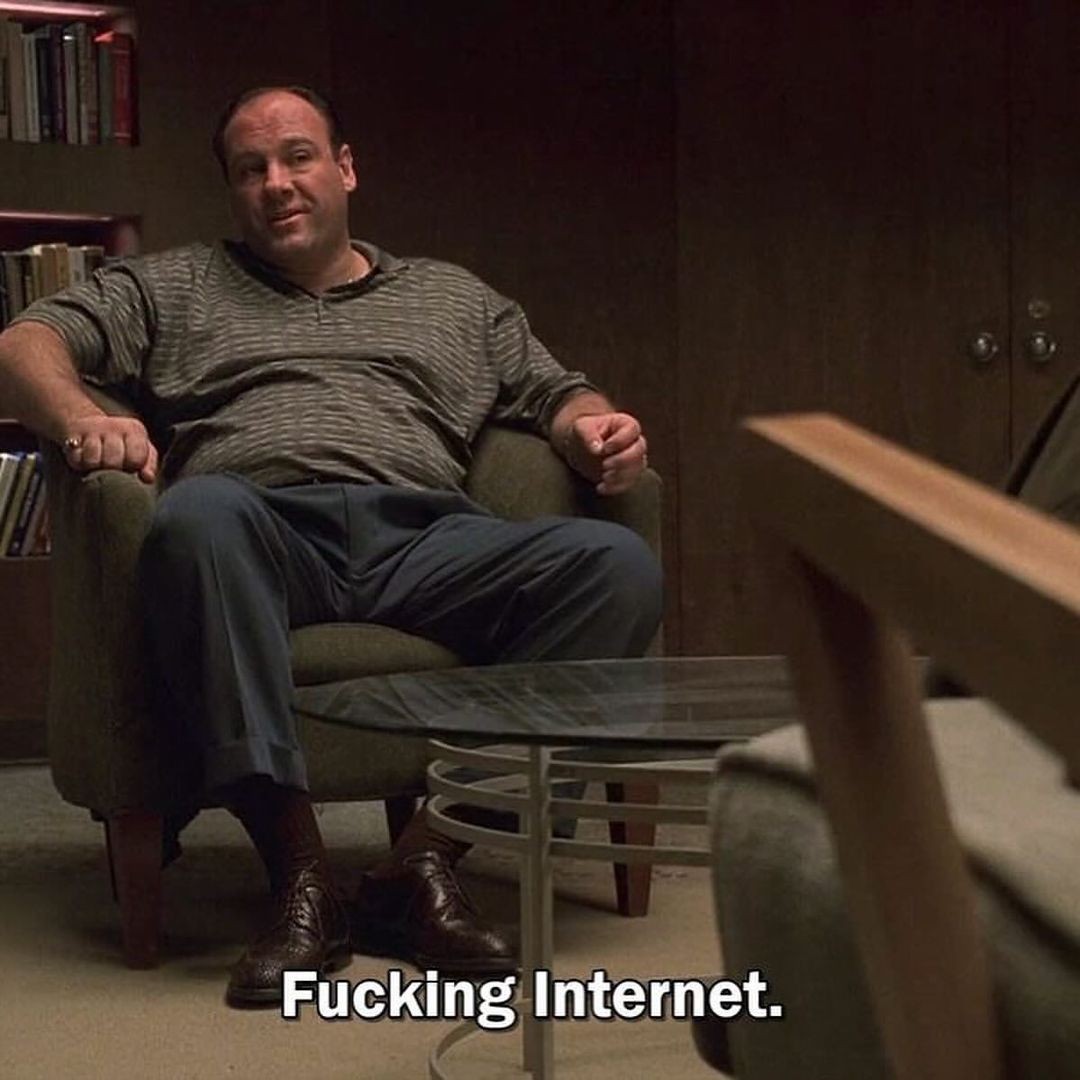
We’ve been working in building brands and taking them to market since 2015, and we dove into AI in early 2020, back when using OpenAI’s API made you feel like someone who owned a fax machine in 1987…a little bit ahead, mostly confused, and definitely overpaying.
Now everyone’s racing toward AI everything. We’re deep enough in the weeds that we’ve started asking questions that don’t have clean answers. Questions like… what happens when all of this shit works? And the less comfortable one, what if it already has?
Here’s what we think is happening, and we want to be wrong.
We really do.
The internet, the whole fucking thing, has become a series of AI tools feeding into other AI tools. Someone uses ChatGPT to write an article. That article gets indexed by Google or Bing or whatever have-you. Another AI scrapes it for training data. A “thought leader” on LinkedIn summarizes all the BS, adds the word “ecosystem,” and posts it as insight. Somewhere along the way, a VC bro reads it and feels informed.
Nobody wrote a damn thing. Nobody reads jack shit. But engagement metrics are up, so your “content leads” can share their AI-built decks during the next status meeting, claiming they’re doing their job well.
If we’re being honest, we find most of it disgusting. Hear us out.
Not the technology. At its core, AI can take us to places we can’t even imagine yet. It’s the absence of thinking that bothers us. The content mills churning out nothing of nothingness. The people who’ve built entire careers on recycling other people’s recycled “thoughts.” The LinkedIn posts that say nothing in exactly the right number of characters. The “thought leaders” who couldn’t generate an original thought if you spotted them the first three words.
We watched a guy at a conference describe himself as an AI expert last week. His expertise, as far as we could tell, consisted of reading AI-generated content about AI and then saying it back louder. He has a podcast. Of course he has a podcast. They need to make mics $50,000 so the barrier to entry is higher.
The problem isn’t that AI-generated content exists. The problem is that it’s becoming the water we swim in, and we’re forgetting we’re wet.
Our parents call us sometimes to ask if a video they saw on Instagram is real. “There’s something weird about his face,” they’ll say, about a politician or a celebrity or a guru. They’re starting to figure out when something’s off. Most people aren’t. Most people just scroll past, let it settle somewhere in their subconscious, and move on.
This is how it happens. Not with a dramatic reveal, “the robots have taken over,” but with a slow drift. You start thinking thoughts that were suggested to you. You develop preferences that are optimized for you. Your sense of self becomes a collaboration with systems you didn’t choose and can’t see. Honestly, it feels like a lot of people today aren’t even themselves anymore. It’s an algorithm that programmed them to like certain things.
We don’t think the internet is going to collapse. We think it’s going to keep working perfectly, by every metric we have, while becoming increasingly meaningless. The SEO will be optimized. The engagement will engage. The content will fucking content. And somewhere underneath all of it, we’ll lose the ability to notice what we lost.
Brands keep telling themselves “social is the place to be.” And sure, growth metrics are up year over year. But time spent on social is declining. People are leaving. Thank God. Maybe some of them will develop actual skills and get paid for those instead of dancing in front of a camera hoping the algorithm blesses them this week.
The platforms won’t tell you that story. But the data’s there if you look. Use that LLM of yours and hit the deep search button. Then again, is that data even real? Ha.
We value social media significantly less now, which feels almost illegal to say as people who run a creative agency. But we can’t unsee what we’ve seen. The whole machinery of it, the way it’s designed to capture attention rather than deserve it, feels like a whole fucking con we used to believe in and now just watch from a distance. Embarrassed we ever bought a ticket, and somehow still getting paid for the show we’re watching.
Here’s the strange part. All of this has made us (at least our team here at Azai Studios) more human.
Not in some inspirational-poster “live love laugh” way. In a practical way. We’re more present when we’re with people now, fully there, because we know it’s real. At least we try to be. If our partners are reading this, they’ll laugh. We put our phones away. We listen differently. The synthetic bullshit flood made us crave the genuine, and now we notice when we’re experiencing it. Even in music, there are millions of AI songs coming out every day. Some of them are probably good. But we’re also seeing more people wanting to see live bands. Thank God.
The disgust and the gratitude are living in the same room, and we’ve stopped trying to reconcile them.
So why do we keep working in this space?
Because the technology isn’t the problem. The absence of thinking is the problem. And that was true before AI. AI just industrialized it and made the pattern undeniable.
What frustrates us is that we’re the most curious species on the planet. We figured out fire, language, mathematics, flight. We split atoms. We landed on the moon with less computing power than the phone in your pocket. And now we have more computational capacity than any generation in human history, and we’re using it to generate LinkedIn posts and automate spam. The amount of fresh water we’re wasting for it is a whole other story.
There are actual frontiers out there. Why are we here? What is consciousness, really? Not the neuroscience hand-wave, but the hard problem. Why is there something it’s like to be you? We’ve been asking these questions for thousands of years and we’re not meaningfully closer to answers.
We’re hopeful that quantum computing might change that. Not in the “quantum means magic” way crypto bros use the word, but in a real way. The ability to model systems we currently can’t, to simulate complexities that classical computing just chokes on. Maybe some of these ancient questions finally get traction. Maybe we uncover truths no one saw coming. Truths that reframe everything we thought we understood about being here at all.
We could go on about this, but we don’t have our tinfoil hats handy.
The point is this. We have the tools to explore genuinely uncharted territory, and instead we’re optimizing click-through rates. It’s not that the technology failed us. We failed the technology.
The humans who stay sovereign over their own minds, who use these tools without becoming dependent on them, will be the ones steering whatever comes next.
It’s possible we’re wrong. It’s possible we’re all sharpening instruments for a ship that’s already sinking. Fuck do we know.
But we’d rather work with intention than watch from the shore, pretending we saw it coming while doing nothing about it.
We’ll leave it with this. The last frontier we have is our own consciousness. Not the information we can access, anyone can access anything now. But the capacity to perceive, to filter, to discern what’s real from what’s merely convincing.
That can’t be scraped. It can’t be indexed. It can be influenced, shaped, maybe even damaged, but not extracted and replicated.
Not yet, anyway.
The question isn’t whether AI will change everything. It already has. The question is whether we’re paying attention to what’s happening to our attention. We’d rather ask uncomfortable questions than pretend the tools are neutral. They’re not neutral. Nothing is neutral. The only honest position is to admit we’re shaping something and try to shape it well.
Oh, what's going on

We're About to Cancel Our Software Subscriptions. We're Building Our Own Everything Now.
We're About to Cancel Our Software Subscriptions. We're Building Our Own Everything Now.
The Internet Is Dying, and We Helped Kill It
The Internet Is Dying, and We Helped Kill It

Azai Studios: Sun, sand and spliffs.
Azai Studios: Sun, sand and spliffs.

New Work Project's sound scape